In 2024, running AI agents locally was a hobbyist pursuit. The hardware was barely sufficient, the models were too large, and the tooling was fragmented. You could make it work, but it required patience, expertise, and a tolerance for friction that most practitioners could not justify.
In 2026, that changed. A laptop with 16GB of memory can now run basic agent workflows. A 4 billion parameter model outperforms 120 billion parameter models from a year ago. What changed was not hardware or models alone. The scaffolding around inference finally became capable enough to make local deployment work.
This matters because agents are not like chatbots. They do not answer a single prompt and stop. They plan, reflect, call tools, retry, and iterate. A single task might involve thirty inference calls. At that scale, the economics of cloud APIs change. The privacy implications change. The latency profile changes. Local inference is no longer just about avoiding vendor lock-in. It is becoming the sensible default for serious agent workflows.
The shift is visible in the tooling. OpenClaw1, the dominant open-source agent platform with 430,000 lines of code and 160,000 GitHub stars, is increasingly being displaced by newcomers. The most interesting of these is Hermes Agent2, built by Nous Research. It approaches the problem differently. Where OpenClaw offers a modular ecosystem of plugins and extensions, Hermes bundles skills natively and builds a learning loop directly into the architecture. The same hardware. The same models. A different harness producing meaningfully different results.
The Small Model Revolution
Here is a fact that would have sounded absurd two years ago. A 4 billion parameter model can now outperform a 120 billion parameter model on practical agent tasks.
Qwen3.53 4B, released in February 2026, achieves 97.5% accuracy on multi-tool function calling benchmarks. It occupies approximately 2.5 gigabytes of memory. The benchmarks tell the story: size is no longer destiny.
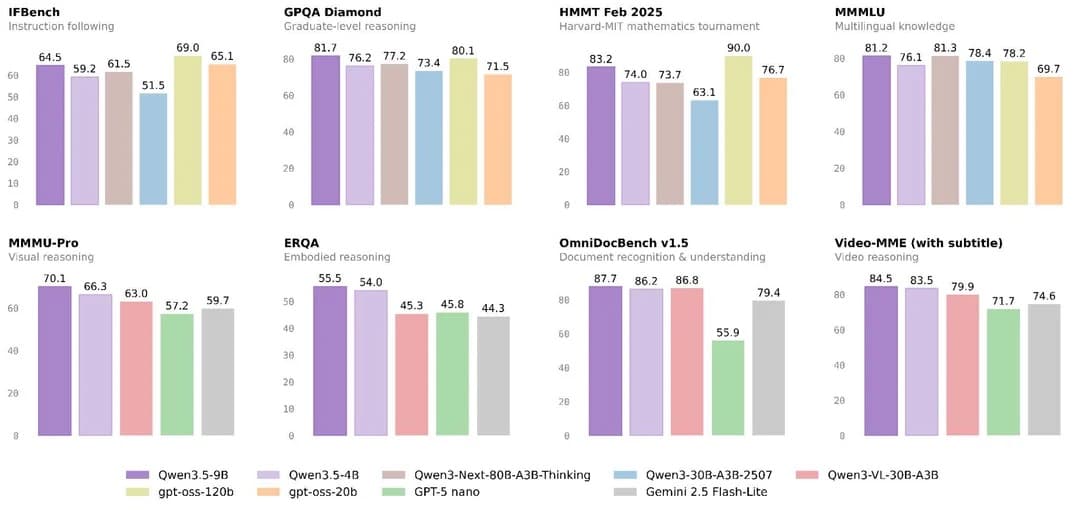 Compact but powerful!
What this means for local deployment is straightforward. You no longer need a Mac Studio with 192GB of unified memory to run capable agents. You no longer need an RTX 4090.
Here are two model families worth considering at different hardware tiers:
-
NVIDIA Nemotron — the 4B Nano variant runs comfortably on 8GB for autocomplete and basic tool calling. The larger Cascade series (30B) requires 24GB but delivers strong agentic performance.
-
Alibaba Qwen3.5 — the 9B variant is the local standout on 16GB, outperforming models ten times its size on vision and document tasks. The 27B variant requires more memory but handles serious agent workflows comfortably.
The Optimization Breakthroughs
Quantization has been the standard approach for fitting large models into small hardware. GGUF format with Q4_K_M precision reduces a 70B model from roughly 140GB to about 40GB. This is well understood. What changed in 2026 is the optimization of what happens during inference, not just the compression of the model weights.
In March 2026, Google Research released TurboQuant4, a training-free algorithm that compresses the KV cache (the memory storing attention states from previous tokens) to 3-4 bits per element. For an 8B model processing 32,000 tokens of context, the KV cache alone consumes 4.6 gigabytes. TurboQuant reduces this by up to 8× without retraining or fine-tuning. On H100 GPUs, it achieves 8× faster attention computation compared to full-precision keys. Combined with 4-bit weight quantization, this means consumer GPUs can now handle long-context agent workflows that were previously impossible.
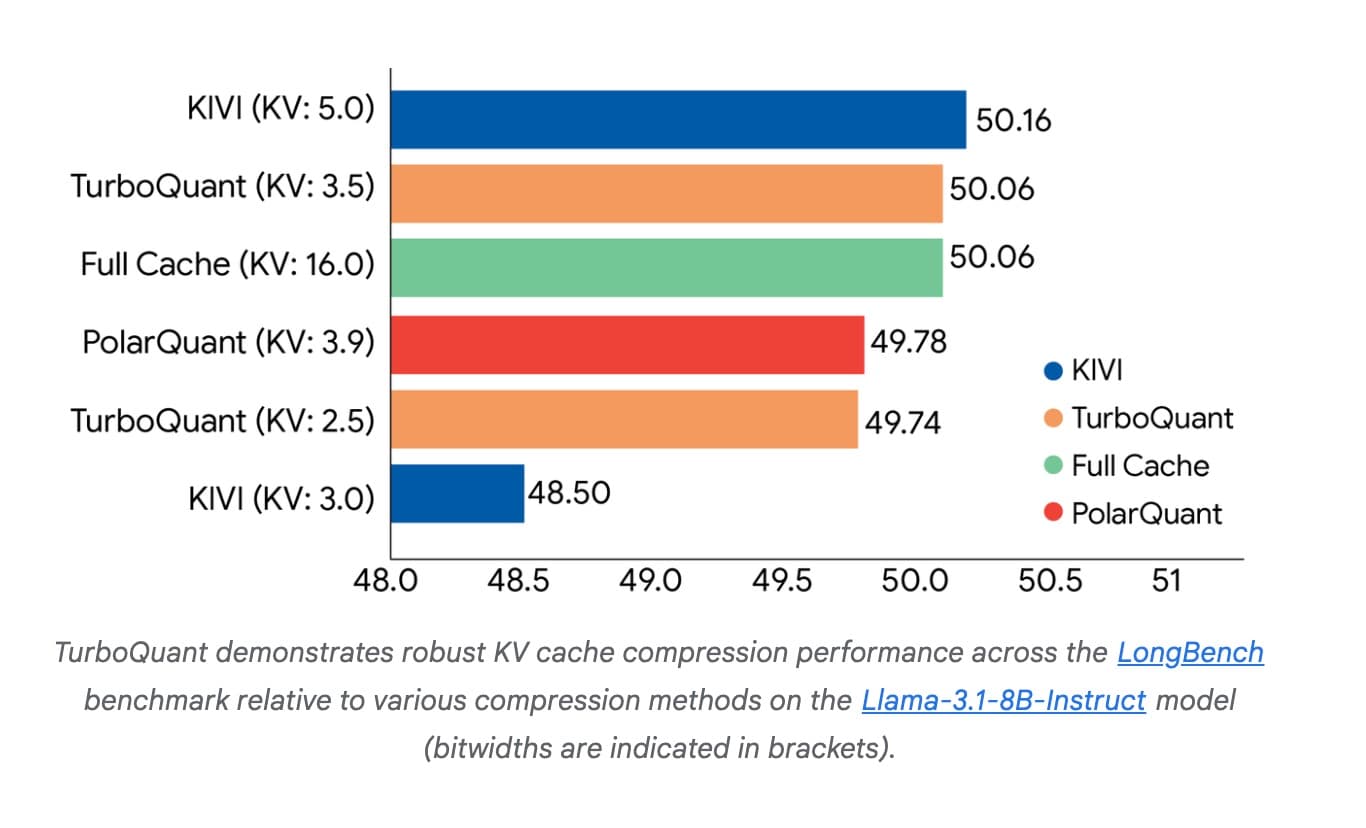 TurboQuant's performance
Separately, Cerebras introduced REAP5 (Router-weighted Expert Activation Pruning) for Mixture-of-Experts models. The insight is that pruning low-impact experts preserves model quality better than merging them. REAP removes 50% of experts from trillion-parameter MoE models while retaining 96% of baseline capability across coding, agentic, and tool-use tasks. A Qwen3-480B-Coder model pruned with REAP runs faster and uses less memory than the unpruned version, with barely measurable quality loss.
These are not marginal improvements. They are architectural shifts that expand what local hardware can execute.
The Privacy Dividend
Much of the marketing around local LLMs focuses on privacy as a lifestyle choice. The framing is off. For security practitioners, privacy is not a vibe. It is a compliance requirement and an operational necessity.
When an agent processes source code containing hardcoded credentials, internal API endpoints, or customer PII, sending that context to a cloud API creates an un-auditable data exfiltration risk. Every request traverses networks you do not control, is logged by systems you cannot inspect, and may be retained for model retraining under terms of service that change without notice.
Local inference eliminates this entire attack surface. The data never leaves the machine. HIPAA-covered entities can process patient information without Business Associate Agreements. GDPR-covered entities avoid data transfer impact assessments. Engineering teams at security-conscious organizations can run agents against production-like environments without exposing internal architecture diagrams to third-party model providers.
You can verify this yourself. The data never leaves your machine, which means the compliance story is straightforward. The fact that it also eliminates per-token API costs is a secondary benefit.
What "Viable" Actually Means
Tool calling is solved. Local models from Qwen, DeepSeek, and the Llama family now achieve 95% or higher accuracy on function calling benchmarks. This was not true in 2024. It is true now.
The harness is maturing. Hermes Agent offers native skill creation and memory persistence. Ollama now integrates directly with coding tools like Claude Code, Codex, and OpenCode, letting you run local models through familiar interfaces. MCP6 (Model Context Protocol) has crossed 97 million downloads and provides standardized tool interfaces without custom bridges. The infrastructure exists to build production agent workflows on local hardware.
What remains uneven is multi-agent orchestration. The tooling for coordinating multiple specialized agents, each with their own memory and tool access, still lags behind cloud equivalents. Frameworks like CrewAI and LangGraph7 support Ollama backends, but the developer experience is rougher than managed cloud services. For single-agent workflows (code generation, document analysis, autonomous research), local stacks are competitive. For complex multi-agent systems, cloud platforms still lead.
The Uncertainty
I do not know whether enterprise adoption will follow developer enthusiasm. The tooling is ready for individual practitioners and small teams. Whether large organizations will shift agent workloads off cloud APIs depends on factors I cannot predict: vendor sales strategies, compliance audit outcomes, the trajectory of cloud pricing.
I do not know if hardware will diversify beyond NVIDIA. Tenstorrent and alternative accelerators are gaining traction, but CUDA remains dominant. The M3 Ultra8 unified memory advantage for large models (512GB enabling 600B+ parameter models locally) is compelling, but Apple Silicon is not appropriate for all deployment scenarios.
I do not know what happens when 9B models become "good enough" for most agent tasks. The current trajectory suggests they will. When they do, the hardware requirements for capable local agents drop to trivial levels. A Raspberry Pi could run what today requires a gaming GPU.
What I know is this: in 2026, for the first time, local AI agents are genuinely viable. Not as a privacy compromise. Not as a cost-cutting measure of last resort. As a first-class deployment option with distinct advantages in data sovereignty, cost predictability, and operational control. The harness caught up. The models shrank. The optimizations multiplied. The local stack is ready.
Footnotes
-
OpenClaw statistics from GitHub and OpenClaw Hub. ^
-
Hermes Agent — Nous Research's self-improving agent with built-in skill creation and learning loop. ^
-
Qwen3.5 — Alibaba Qwen team, released February 2026. Tool calling benchmarks from JD Hodges and Digital Applied. ^
-
TurboQuant — Google Research, March 2026. See also o-mega.ai analysis. ^
-
REAP — Cerebras Systems, "REAP: One-Shot Pruning for Trillion-Parameter Mixture-of-Experts Models." ^
-
MCP — Model Context Protocol, 97M+ downloads as of early 2026. See Digital Applied ecosystem map. ^
-
CrewAI Ollama integration and LangGraph local deployment docs. ^
-
M3 Ultra specifications and unified memory architecture from Apple and community benchmarks from r/LocalLLaMA. ^